

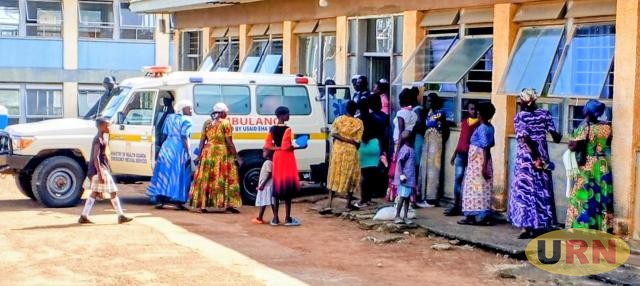
Anaka General Hospital in Nwoya district is grappling with a severe shortage of emergency transport, relying on a single functional ambulance to serve a vast catchment area stretching across multiple districts.
Dr. Jolly Joe Lapat, the Hospital Executive Consultant, says the facility has operated with just one ambulance for the past four years, a situation that continues to strain service delivery in emergencies and referrals.
According to Lapat, the hospital is the first responder to nearly all emergencies, including road traffic accidents along the busy Karuma-Pakwach highway in Nwoya district, extending up to Pakwach and Nebbi districts.
The current ambulance, delivered in 2022, has been the hospital’s only operational emergency vehicle, handling all referral and rescue missions within the wide coverage area.
However, Dr. Lapat notes that relying on a single ambulance has frequently limited their response capacity on several occasions.
He notes that the hospital has an older ambulance, donated in 2015, which is currently grounded but still repairable, and believes that refurbishing it could significantly ease the burden.
He calls on the government and partners to prioritize the hospital’s needs, stressing that acquiring an additional ambulance would greatly improve emergency response and patient care.
Dr James Okello, the Acting Nwoya District Health Officer, warns that without urgent intervention, the hospital’s ability to respond to emergencies and save lives across its area of operation could remain severely constrained.
Nwoya District Chairperson Emmanuel Orach says the district leadership has already escalated the matter to the Ministry of Health.
Anaka General Hospital serves a wider population within Nwoya District and beyond, handling a significant patient load across its departments. Hospital statistics indicate an estimated 15,000 outpatient visits per quarter, averaging about 5,000 patients per month, the majority of whom are ambulatory patients who walk in for treatment.
By URN

Leave a Reply