

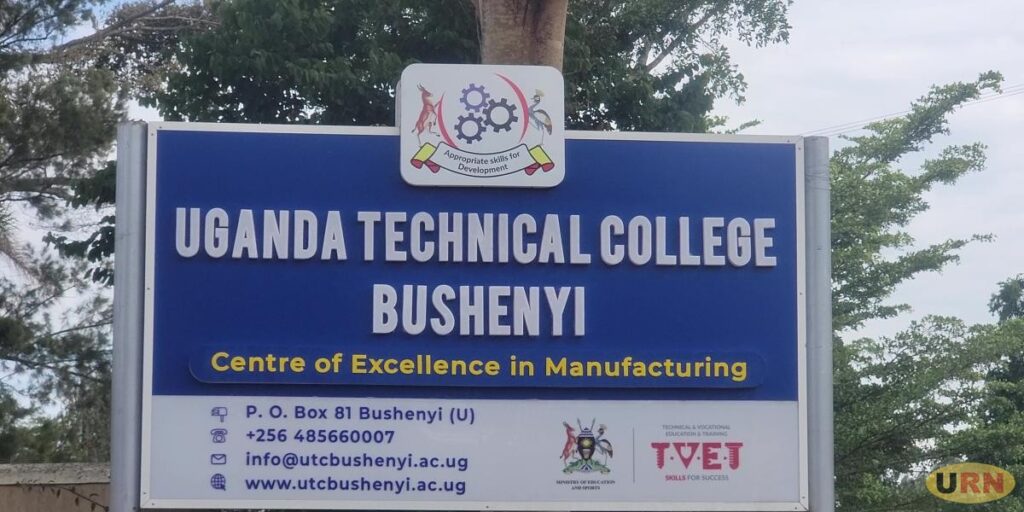
Vocational and technical training institutes in the Ankole Sub-region are calling on the government to reinstate cost-sharing for trainees to sustain competence-based training programmes.
Under the Uganda Skills Development Project (USDP), supported by a $100 million () World Bank grant, the government previously funded training for more than 500 students across several institutions.
However, since the project ended, institutions say they have struggled to support trainees, particularly those from low-income backgrounds.
Alex Twebaze, the acting deputy principal of Uganda Technical Institute Bushenyi, says implementing the competence-based curriculum requires significant financial resources, making it difficult for disadvantaged learners to enroll and complete training.
He adds that the earlier cost-sharing arrangement, where the government covered 80 percent and the learner 20 percent, had eased access for underprivileged students.
Kambaho Narasi, communications manager at the Uganda Vocational and Technical Assessment Board (UVTAB), says the government rationalized the Uganda Business and Technical Examinations Board (UBTEB) and the Directorate of Industrial Training (DIT) to form UVTAB to bridge existing gaps in the sector.
He added that the TVET Act 2025 provides for employer-led, competence-based training designed in collaboration with industry, which he said will help address current challenges in vocational education and training.
By URN



Leave a Reply